
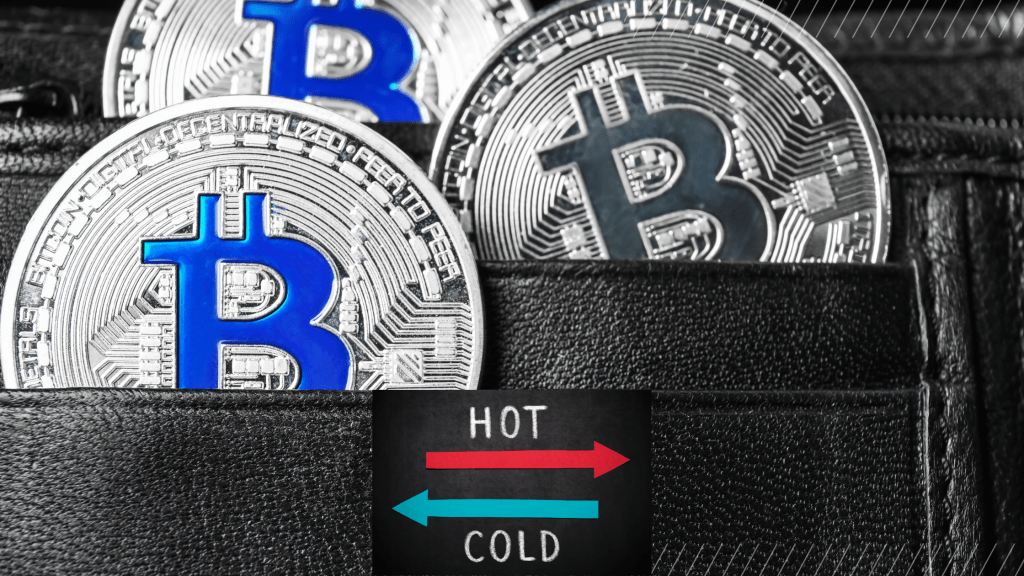
You need somewhere convenient and secure to store your Bitcoin. Anybody can create a Bitcoin account and obtain a wallet. Unlike opening a bank account, where there are set policies and procedures that the customer must follow, obtaining your own Bitcoin wallet offers much more freedom.
If a customer does not comply with policies enforced by a bank, the bank can shut down or freeze their accounts. Transactions can also be reversed or frozen.
With Bitcoin, there is no central authority and you can transact with Bitcoin networks 24 hours a day, 7 days a week.
Anybody who can access the internet can interact with Bitcoin by sending, storing, and opening a Bitcoin account. You can download a digital wallet app and get started. However, there are different types of wallets-known as ‘Hot’ and ‘Cold’.
Types of Bitcoin wallets
Hot Wallets
Hot wallets are connected to the internet. They are also known as software wallets and can be defined as online applications that provide the user with features allowing them to buy, send, trade and store crypto assets such as coins, tokens and non-fungible tokens (NFT’s) utilising multiple different networks.
It is important to remember that not all wallets allow for sending one type of coin to another. It depends if they are cross-chain compatible.
There main categories of Hot wallets include:
Web Browser Wallets
Web wallets allow the user to access their assets via a web browser such as Chrome, Opera or Firefox. This allows for convenient access to a user’s assets, plus web wallets are very flexible.
Mobile Wallets
Mobile wallets are apps on a mobile device. They allow the user to manage their crypto assets easily. at any time. It is important to ensure that your phone is secure and bear in mind that your phone could be lost or stolen.
Desktop Wallets
Desktop wallets are software applications which can be installed on your computer. They are usually considered more secure than mobile and web wallets and also allow for control over your private keys.
Lightning Wallets
Lightning wallets use the ‘lightning network’ and are a more cost efficient, faster way to interact with Bitcoin. The lightning network is decentralized and uses smart contract functions in the blockchain.
Cold Wallets
Cold wallets look like USB drives. Your cryptocurrency is stored offline, which offers enhanced security and protection from online vulnerabilities and threats.
Recommended hardware wallets include brands such as Ledger and Trezor.
Some hardware wallets can have some limitations though. We will look at the best hardware wallets in more depth in another blog post.
Paper Wallets
Paper wallets are classed as cold storage. They are physical documents that contain the public key which is used to receive Bitcoin, and the private key used to access and send the Bitcoin.
BitAddress can be used to generate a random private key as a paper wallet. The copies are unlimited and you can use a BIP38 password to encrypt the documents.
Disadvantages Of A Paper Wallet Include :
- Paper can get damaged easily
- If a paper wallet is lost or damaged, the stored Bitcoin can be difficult or impossible to retrieve
- When you want to use your Bitcoins, you have to import the private key into a software wallet. This can cause exposure to potential risks.
Choosing A Crypto Wallet
When choosing a wallet, it is important to consider:
- How secure you want your assets to be
- How much trading that you wish to do
If you will be storing a lot of money for a long period of time, a cold wallet is the most secure option.
Fees Involved
Almost all blockchain transactions involve ‘gas fees’ when you send crypto. Different types of wallets involve varying fees.
We will take a deep dive into gas fees in another post, to familiarise yourself with the concept and how this works.

 totallycoined.com